
Bilthoven Spoorzone
Station Area Transformation and Transit Oriented Densification
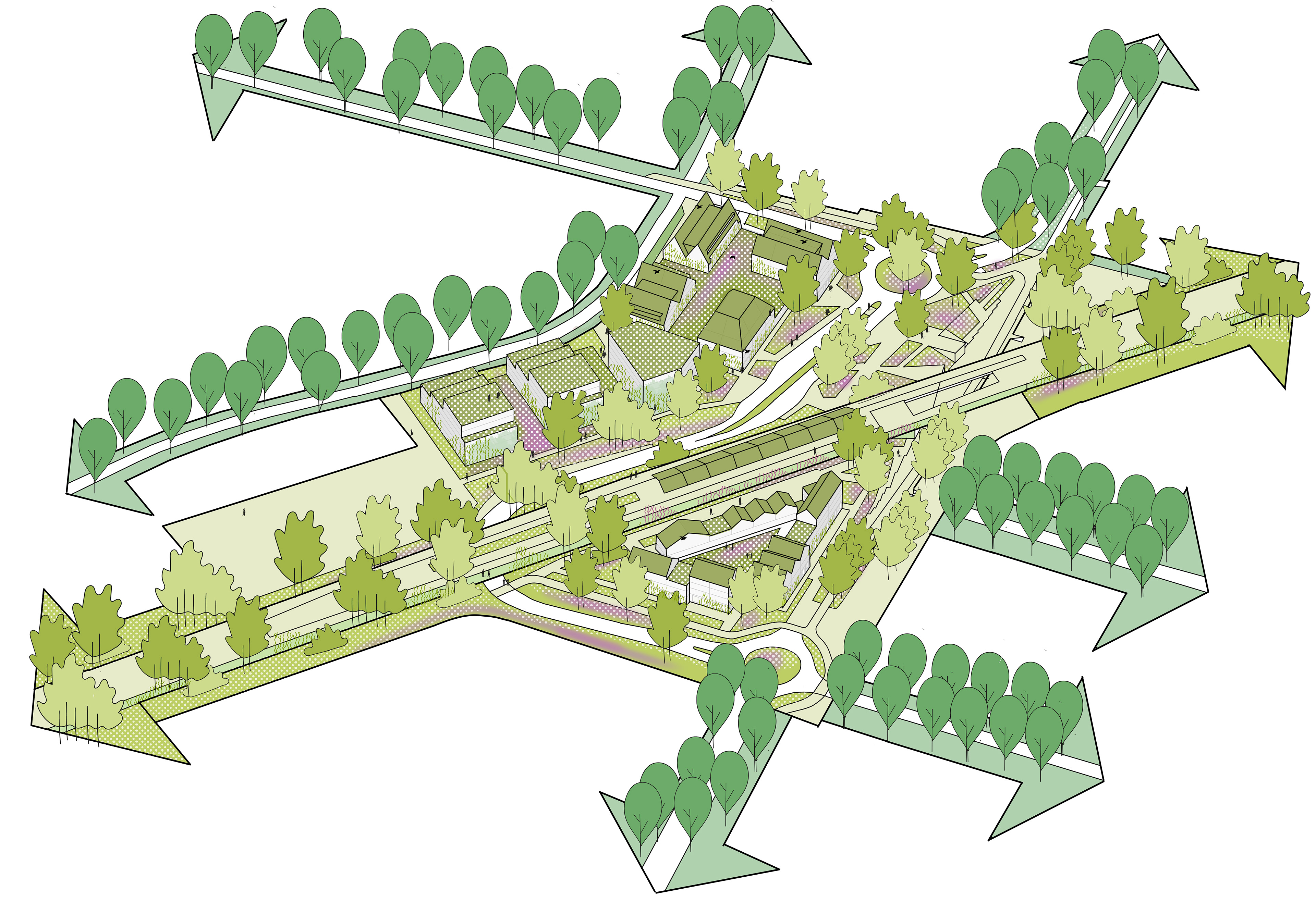
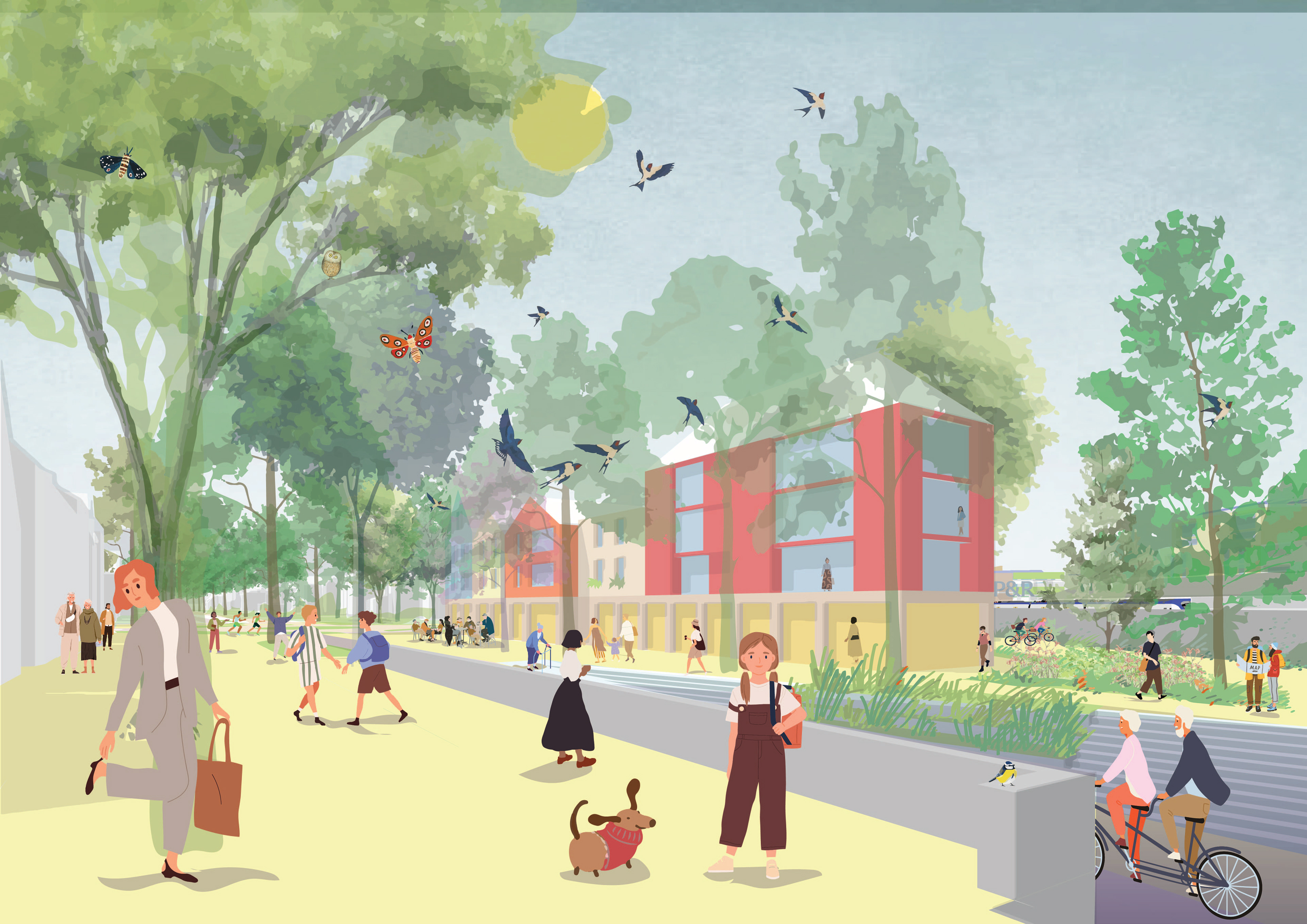
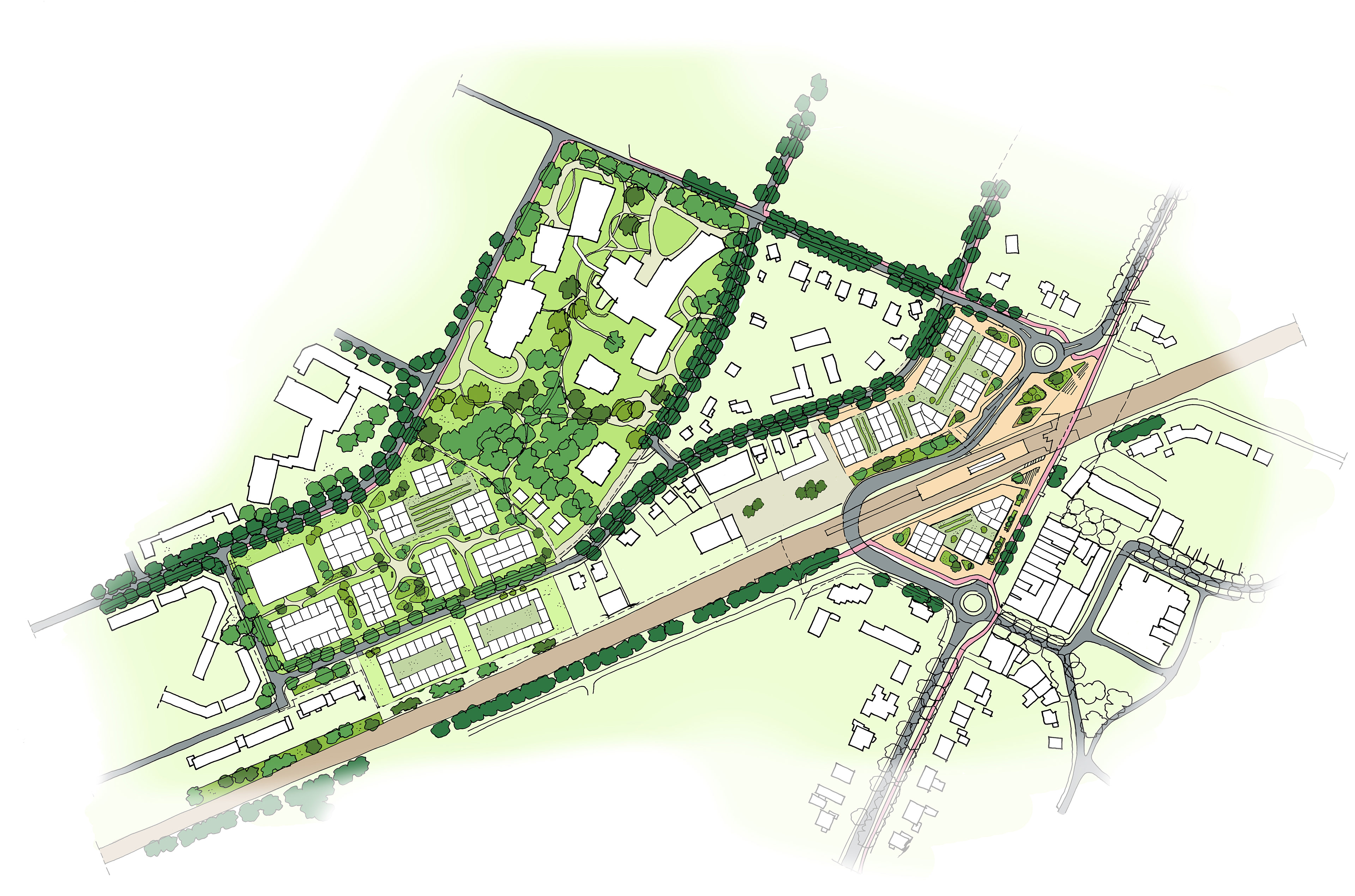
Bilthoven Spoorzone explores the spatial transformation of a station area under significant housing pressure. The project investigates how high density residential growth can be integrated within an existing mobility node while preserving spatial quality, public realm coherence and local identity.
The study positions the station area not as residual infrastructure space, but as a strategic urban anchor capable of structuring long term development.
The Challenge
The municipality set an ambitious housing target in a spatially constrained area shaped by rail infrastructure, mobility flows and existing neighbourhood fabric.
The central challenge was to maximise development capacity while ensuring defensible spatial quality, livability and long term integration with mobility and public space systems.
The Approach
The framework was developed through a research informed and interrogative design methodology.
Key decisions were grounded in specialist input, including mobility analysis, density modelling, environmental studies and spatial feasibility assessments. Rather than producing a single fixed proposal, the process tested multiple scenarios to evaluate spatial impact, sunlight access, circulation logic, phasing and buildability.
This iterative and defensible approach ensured that density ambitions were translated into a coherent and spatially justified urban structure.
The project integrates:
Mobility systems and station accessibility
Development capacity and typology strategy
Public realm sequencing and spatial hierarchy
Interface between infrastructure and surrounding neighbourhoods
Development capacity and typology strategy
Public realm sequencing and spatial hierarchy
Interface between infrastructure and surrounding neighbourhoods
Role
Led the spatial structuring and density strategy. Coordinated specialist input and guided the translation of quantitative housing ambition into an integrated and defensible station area framework.
Significance
Bilthoven Spoorzone demonstrates how transit oriented densification can function as an integrative urban strategy rather than a purely numerical exercise.
The project reinforces the role of research informed design as a mediator between infrastructure constraints, development pressure and spatial quality.